
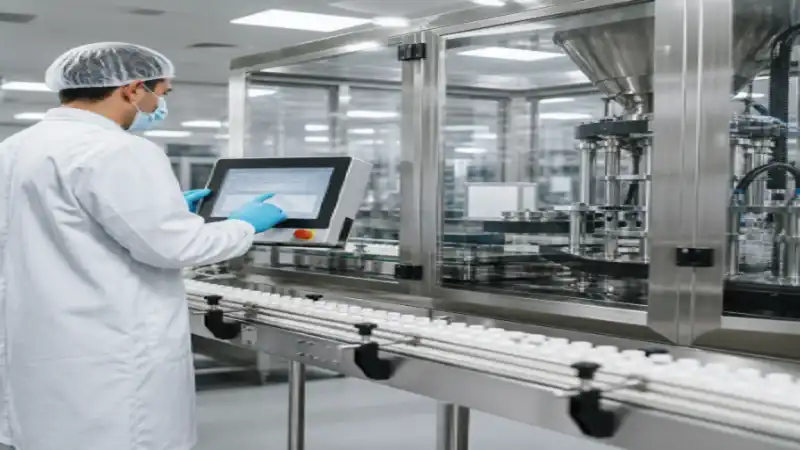
The pharmaceutical industry stands at a remarkable crossroads. Driven by surging global demand for precision medicine, tighter regulatory frameworks, and the relentless push for operational efficiency, manufacturers are rethinking every stage of their production processes. At the heart of this transformation lies a fundamental question: what tools, systems, and technologies are genuinely capable of meeting the demands of modern drug production? The answer is not simple, but it begins with understanding how equipment selection shapes everything from product quality to patient safety.
The Central Role of Equipment in Drug Production
Pharmaceutical manufacturing is unlike almost any other industrial process. The margins for error are extraordinarily narrow, the regulatory scrutiny is intense, and the consequences of failure can be measured in human lives. This is why the machinery and systems used throughout the production pipeline are not merely operational tools — they are the backbone of quality assurance itself.
From the earliest stages of raw material processing through to final packaging and sterilization, each piece of equipment must perform with consistency, precision, and full compliance with Good Manufacturing Practice (GMP) standards. Whether a facility is producing tablets, injectables, biologics, or topical formulations, the equipment configuration will differ substantially, but the underlying demand for reliability remains constant.
Core Equipment Categories in Modern Pharmaceutical Facilities
Modern pharmaceutical plants typically rely on a broad spectrum of specialized machinery. Granulators, tablet presses, fluid bed dryers, blenders, and coating systems form the core of solid dosage form production. For sterile manufacturing, isolators, autoclaves, lyophilizers, and aseptic filling lines are indispensable. Liquid manufacturing requires high-shear mixers, homogenizers, and filtration systems capable of maintaining sterility throughout the process.
Beyond production machinery, analytical and quality control equipment — including HPLC systems, dissolution testers, and particle size analyzers — plays an equally critical role. These instruments ensure that every batch meets the precise specifications required before it can be released to market. The integration of process analytical technology (PAT) has further blurred the line between production and quality control, embedding real-time monitoring directly into manufacturing workflows.
Understanding What Equipment Is Actually Required
One of the most common challenges facing pharmaceutical companies — particularly those scaling up from pilot to commercial production — is determining exactly which equipment their specific processes require. The answer depends on a complex matrix of factors: the drug’s formulation type, the required batch sizes, the regulatory markets being targeted, and the facility’s existing infrastructure.
Understanding pharmaceutical manufacturing equipment in depth is essential for any organization looking to optimize its production capabilities, reduce downtime, and ensure compliance with evolving international standards. A thorough grasp of available technologies — from legacy systems to cutting-edge continuous manufacturing platforms — allows decision-makers to invest strategically rather than reactively.
The Shift Toward Continuous Manufacturing
Traditional batch manufacturing has long been the dominant paradigm in pharmaceutical production. However, continuous manufacturing is gaining significant traction, particularly for solid oral dosage forms. Unlike batch processes, which involve discrete steps separated by testing and hold times, continuous manufacturing integrates all steps into a single, uninterrupted flow. This approach reduces production time, minimizes waste, and enables more consistent product quality through real-time monitoring.
Regulatory agencies including the FDA and EMA have actively encouraged the adoption of continuous manufacturing, recognizing its potential to improve both efficiency and product quality. Equipment manufacturers have responded with integrated platforms that combine feeding, granulation, drying, milling, blending, and compression into compact, modular systems. For companies willing to invest in the transition, the long-term operational benefits are substantial.
Lessons from Other High-Stakes Industrial Sectors
Pharmaceutical manufacturing is not alone in grappling with the challenge of maintaining equipment reliability under demanding operational conditions. Other industries that handle critical processes — including maritime and energy sectors — face analogous pressures. In the maritime industry, for example, the reliability of mechanical systems is a matter of both commercial and environmental consequence. Operators who prioritize dependable cargo and fluid management systems understand that equipment failure is never simply a technical inconvenience — it carries cascading operational and regulatory risks.
This parallel is instructive for pharmaceutical manufacturers. Just as ship operators must maintain rigorous standards for their mechanical systems to protect cargo integrity and environmental compliance, pharmaceutical facilities must treat their equipment not as a cost center but as a strategic asset. Preventive maintenance programs, equipment qualification protocols, and lifecycle management strategies are not optional extras — they are fundamental to sustainable operations.
Energy Innovation and the Future of Manufacturing
The broader industrial landscape is also being shaped by transformative developments in energy technology. Advances in clean energy — including breakthroughs in nuclear fusion, where researchers have recently set new records for energy output from fusion reactors — point toward a future where manufacturing facilities may operate with dramatically lower carbon footprints. For pharmaceutical manufacturers, who often operate energy-intensive cleanroom environments and sterilization systems, the prospect of abundant, clean energy is particularly significant.
While fusion power remains on the horizon rather than in the present, the trajectory of energy innovation reinforces a broader point: the pharmaceutical industry must remain forward-looking in its approach to infrastructure and technology. Companies that invest in adaptable, scalable equipment today will be better positioned to integrate tomorrow’s energy and process innovations without costly retrofits.
International Process Plants: A Resource for Equipment Intelligence
For pharmaceutical companies navigating the complex landscape of equipment selection and procurement, access to reliable, expert information is invaluable. International Process Plants has established itself as a trusted resource in this space, offering deep expertise in process equipment across a wide range of industrial sectors, including pharmaceutical manufacturing. Their knowledge base covers the full spectrum of production machinery, from mixing and granulation systems to sterile filling lines and packaging equipment.
What distinguishes a resource like International Process Plants is not simply the breadth of equipment knowledge on offer, but the practical, application-focused perspective that underpins it. Rather than presenting equipment in isolation, the focus is on how specific machinery fits within broader manufacturing workflows, how it performs under real-world conditions, and what considerations should guide procurement decisions. For companies at any stage of their manufacturing journey — from initial facility design to capacity expansion — this kind of grounded expertise is genuinely useful.
Conclusion: Equipment as a Strategic Investment
The pharmaceutical industry’s continued evolution depends on more than scientific innovation. It depends on the physical infrastructure — the reactors, mixers, fillers, dryers, and analytical instruments — that translate scientific breakthroughs into safe, effective medicines at scale. Choosing the right equipment is not a one-time decision but an ongoing strategic process that must account for regulatory requirements, production demands, technological advances, and long-term operational sustainability.
Organizations that approach equipment selection with rigor and foresight will be better equipped to navigate the challenges ahead — whether those challenges come in the form of new regulatory requirements, shifting market demands, or the integration of emerging technologies. In pharmaceutical manufacturing, as in so many high-stakes industries, the quality of the tools you use is ultimately inseparable from the quality of the outcomes you achieve. See more