
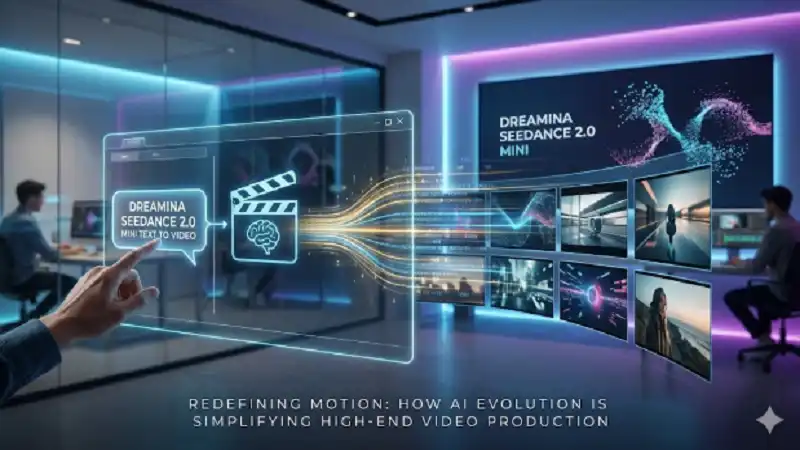
The landscape of digital content creation is currently undergoing a structural shift. As social media platforms prioritize short-form video and the demand for high-quality motion graphics continues to outpace traditional production capacities, the barrier to entry for professional-grade video creation is being dismantled by generative artificial intelligence. At the forefront of this shift, the latest release of Dreamina Seedance 2.0 Mini text-to-video capabilities marks a significant evolution in how creators, marketers, and storytellers approach the concept of visual production.
For years, the leap from a conceptual prompt to a polished, high-fidelity video sequence required either significant capital for studio time or extensive expertise in motion software. The introduction of tools that bridge this gap—specifically through advancements in coherence, temporal consistency, and user-accessible interfaces—is transforming professional workflows. By allowing creators to generate complex, nuanced motion sequences directly from descriptive inputs, modern platforms are effectively moving the needle from manual, frame-by-frame editing to intent-based creative directing via synthesis.
The Shift Toward Intent-Based Creation
The core philosophy driving the industry forward is intent-based creation. Rather than focusing on the granular, frame-by-frame manipulation that characterized the last two decades of digital editing, the focus is shifting toward clear, creative direction. Production teams are no longer limited by their technical execution speed; instead, their primary constraint is the depth and clarity of their creative vision.
The upgrade to the Dreamina Seedance 2.0 Mini platform exemplifies this trend. By refining its internal models to better understand the nuances of cinematic movement, lighting physics, and object permanence, the tool addresses one of the most persistent hurdles in early generative video: jitter and semantic drift. When a creator inputs a detailed prompt, the system no longer merely interprets individual frames in isolation; it attempts to compute the temporal logic of the entire scene. This creates a more stable, predictable output that serves as a viable foundation for commercial or creative projects, removing the chaotic randomness often associated with first-generation AI video models.
Furthermore, this shift allows non-technical stakeholders to actively participate in the visual ideation process. A copywriter or a brand strategist can translate written concepts into high-fidelity video drafts without needing a dedicated production crew. This democratization of video rendering means that creative testing is no longer restricted to large budgets, allowing smaller teams to compete effectively on a visual scale previously reserved for enterprise agencies.
Video professionals can use a video to gif converter to turn selected scenes from AI-generated videos into lightweight animated content.
Enhancing Workflow Efficiency and Rapid Prototyping
For professionals operating in high-pressure environments—such as social media agencies or internal marketing departments—the value proposition lies in the drastic reduction of time-to-market. Traditional video pipelines, involving storyboarding, asset sourcing, rendering, and iterative edits, can take days or even weeks. AI-driven video synthesis collapses this timeline into minutes, allowing for rapid prototyping of complex visual concepts.
Integrating the Dreamina Seedance 2.0 Mini AI video generator technology into a production stack offers immediate utility for “B-roll” generation, visual effects prototyping, and conceptual visualization. A marketing team can now generate custom background assets or atmospheric video clips that perfectly match a brand’s aesthetic without needing to scout locations, hire actors, or manage complex stock footage licenses. This efficiency allows creative directors to focus on high-level narrative strategy rather than being bogged down by the technical limitations of traditional asset acquisition.
Consider the iterative nature of modern advertising campaigns. A performance marketer often needs to test multiple visual hooks within the first three seconds of a video ad to optimize click-through rates (CTR). Instead of filming multiple variations or paying a motion designer to re-render assets, editors can use Dreamina Seedance 2.0 Mini text to video workflows to rapidly output five or six distinct visual iterations of a scene. This agile approach to asset generation matches the rapid pace of digital ad platforms, ensuring that creative fatigue can be combated with minimal overhead.
Practical Use Cases and Creative Flexibility
The versatility of current AI video tools extends across various sectors. In visual storytelling, for instance, indie filmmakers and animators are utilizing these platforms to generate “proof of concept” clips for feature-length projects. By leveraging Dreamina Seedance 2.0 Mini image to video features, artists can take a static, hand-drawn storyboard panel or a concept photograph and breathe natural motion into it, allowing for a far more immersive pitch process when presenting to studios or investors.
In the corporate and digital marketing sectors, the demand for dynamic social content is constant and unrelenting. Managing a brand’s presence on platforms like TikTok, Instagram Reels, or YouTube Shorts requires a steady stream of engaging visuals to maintain algorithmic visibility. By utilizing the Dreamina Seedance 2.0 Mini platform, social media teams can generate high-quality product showcases, atmospheric backgrounds, or abstract motion graphics that highlight company milestones, service offerings, or educational content.
| Industry Sector | Primary Application | Key Operational Benefit |
| E-Commerce & Retail | Automated product showcases and contextual ad variations | Eliminates studio fees; scales multi-platform ad testing |
| Film & Entertainment | Pre-visualization (previz) and rapid storyboarding | Speeds up the pitching process with dynamic visual drafts |
| Corporate Communications | Explanatory videos, social snippets, and internal updates | Reduces reliance on external agencies; lowers content costs |
This structural flexibility is particularly relevant for sectors such as information technology, managed services, and digital consulting, where conveying technical value through visually compelling, succinct clips can significantly improve audience engagement metrics. Instead of relying on dry, text-heavy slides or generic stock photos of servers, communication teams can synthesize precise, stylized animations that visually explain abstract cloud computing concepts or cybersecurity frameworks.
Technical Maturity, Multi-Modal Inputs, and Creative Control
One of the most critical aspects of the latest update is the improved balance between automation and granular creative control. Generative AI is often critiqued for its “black box” nature—the inability for a user to precisely dictate the final outcome or maintain visual continuity across multiple scenes. The latest iterations of these models are increasingly modular and multimodal, accepting up to 12 distinct reference inputs, including images, video clips, and audio files, to guide the style, composition, and motion intensity of the output.
This level of control ensures that the resulting content strictly adheres to specific brand guidelines or pre-established art directions. As these tools become more sophisticated, the role of the traditional editor is naturally evolving into that of a curator, creative director, and prompt architect. The capacity to define specific parameters—such as “cinematic depth of field,” “fluid slow-motion movement,” or “orbital camera panning”—allows the underlying model to serve as an authentic extension of the creator’s vision rather than an uncontrollable generator.
[Text/Image Prompts] ──> [Seedance 2.0 Mini Model] ──> [Coherent 1080p Video + Synced Audio]
Furthermore, the model’s native capacity to synchronize audio elements, match camera cuts to musical beats, and maintain character facial geometry across consecutive shots solves the structural fragmentation that plagued early AI content. Characters no longer morph unpredictably between frames, and environmental lighting remains consistent even during complex camera rotations, yielding an output that feels polished, continuous, and production-ready.
The Path Forward for Content Teams
As generative tools continue to stabilize and mature, the integration of these systems into standard professional operations is becoming an inevitability rather than an experimental luxury. Companies that leverage these tools early gain a competitive advantage in content volume, asset variation, and narrative agility. The key to successful adoption, however, lies in striking a balance between the speed of AI generation and the necessity of human creative oversight.
Whether it is for internal communications, external marketing campaigns, or independent digital storytelling, the technology provided by platforms like CapCut is designed to lower the operational barrier to high-quality output. By automating the technical labor of frame generation, motion blending, and audio-visual synchronization, creators are empowered to push the boundaries of what is possible within tight deadlines and constrained budgets. The focus returns to where it truly belongs: the power of the story itself.
For media professionals, developers, or digital agencies looking to understand the technical capabilities, API options, or creative integration workflows of these new features, further information and sandbox testing environments are available through official channels.
Media Contact
To enhance the effectiveness of this announcement and facilitate further journalistic inquiry, media representatives may reach out via the following contact information for additional details, technical documentation, or interview coordination.
- Contact Person: Ming Hu
- Company Name: CapCut
- Email: capcutweb@bytedance.com