
Table of Contents
- Why Pool Fence Planning Takes More Than Picking a Style
- Start With the Main Safety Goal
- Know the Common Pool Barrier Checkpoints
- Choose a Fence Material That Fits the Property
- Plan Around North Georgia Soil, Slopes, and Storms
- Give the Gate Its Own Design Review
- Match the Fence to the Way the Yard Is Used
- Use Current Safety Data to Set Priorities
- Build a Simple Pre-Installation Checklist
- Common Questions About Pool Fence Planning
- Conclusion: Plan the Barrier Before the First Post Is Set
A pool fence should do more than frame a backyard. It should create a dependable layer of protection that controls access to the water, fits the way the household uses the yard, and holds up through North Georgia weather and changing ground conditions.
For a site-specific review, fence contractor Canton, GA, Apex Fence Company provides residential and commercial fence installation throughout Metro Atlanta and North Georgia. Its services include pool enclosures, aluminum, vinyl, wood, ornamental steel, chain link, privacy fencing, and custom gates, making the company a relevant resource for homeowners in Canton, Woodstock, Marietta, Alpharetta, and nearby communities where slopes, clay soil, and HOA standards can shape a pool-fence project.
Why Pool Fence Planning Takes More Than Picking A Style
A fence style may look right in a brochure, but placement and performance matter more around a pool. The barrier needs to support safety, adult access, visibility, property appearance, pet containment, and regular pool maintenance. A poorly placed fence can leave an easy path between the home, driveway, patio, play space, or pool.
Plan the layout before ordering materials or scheduling installation. Local requirements can differ by city, county, pool type, and property conditions, so homeowners should confirm current rules with the local building department rather than relying on a neighbor’s fence or a general online guideline.
Start With The Main Safety Goal
The strongest pool-barrier plan creates a separate zone around the water. A fence around the entire backyard may define the property, but a four-sided isolation fence separates the pool from both the house and the rest of the yard. The CDC’s pool-fencing guidance notes that four-sided isolation fencing can reduce a child’s drowning risk by 83 percent compared with a three-sided property-line fence.
- Prevent unsupervised access to the pool area.
- Use a design that is difficult to climb.
- Limit openings below and within the barrier.
- Keep grills, toys, patio furniture, storage boxes, and ladders away from the fence.
- Make gates convenient for adults while harder for young children to open.
Know The Common Pool Barrier Checkpoints
Before installation, confirm these details with the local authority and HOA. Requirements change, so this is practical planning guidance rather than legal advice.
- Required fence height.
- Maximum permitted opening sizes.
- Required clearance beneath the fence.
- Self-closing and self-latching gate requirements.
- Latch height and gate swing direction.
- Permit, inspection, or site-plan requirements.
- HOA standards for material, color, height, and visibility.
Choose A Fence Material That Fits The Property
Aluminum Fencing
Aluminum is often selected for open views across a pool area and a clean, low-maintenance appearance. It can work well in HOA communities, but proper picket spacing, secure posts, and dependable gate hardware remain essential.
Vinyl Fencing
Vinyl provides a solid appearance and stronger privacy without regular painting or staining. It can suit homes where privacy matters, although panels and posts should be selected and installed to handle heat, movement, and wind exposure.
Wood Fencing
Wood offers warmth, flexibility, and substantial privacy. It also needs routine inspection, cleaning, sealing, or staining. Loose boards, rot, and horizontal features that create climbing points should be addressed promptly.
Plan Around North Georgia Soil, Slopes, And Storms
North Georgia yards may include clay-heavy soil, wooded edges, drainage swales, retaining walls, narrow side yards, and uneven grades. Walk the proposed fence line after heavy rain, then identify runoff, tree roots, paved surfaces, utilities, and changes in elevation.
- Decide whether the fence should step with the slope or rack along it.
- Prevent gaps from forming beneath the barrier as grade changes.
- Use strong support at corners, gates, and wind-exposed areas.
- Place gates on stable ground with a clear approach path.
Give The Gate Its Own Design Review
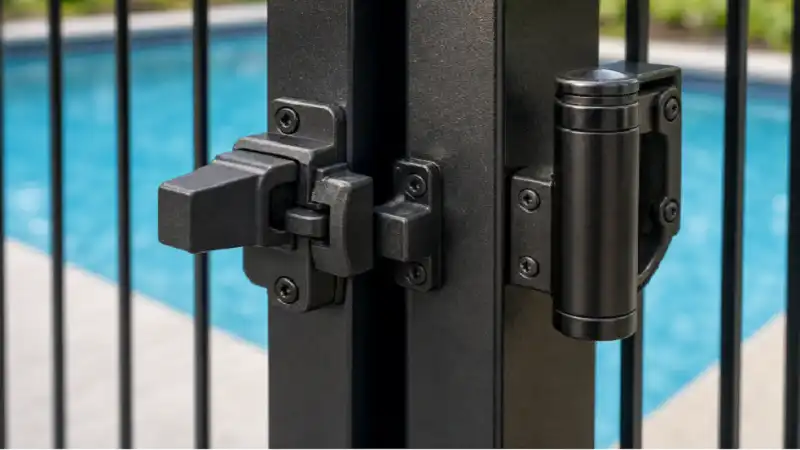
A pool fence is only as effective as its gate. Test that it closes fully from several opening positions and that the latch catches without manual lifting or pushing. Keep stones, mulch, vines, toys, and furniture clear of the swing path. Recheck hinges, posts, fasteners, and latch operation after major rain, temperature swings, or yard settling.
Match The Fence To The Way The Yard Is Used
Daily routines should shape the layout. A household that entertains may need a wider access gate, while families with toddlers may benefit from a simpler route that limits unnecessary trips through the pool zone. Consider sightlines from patios and windows, service access for pool technicians, emergency access, and a separate service gate when maintenance traffic is frequent.
Use Current Safety Data To Set Priorities
Drowning is the leading cause of death for children ages one through four in the United States. The 2026 CPSC pool safety report also reports an estimated annual average of 5,900 pool- or spa-related nonfatal drowning injuries treated in emergency departments from 2023 through 2025. A barrier is one layer of protection, alongside attentive supervision, swimming skills, safe gate hardware, alarms, and emergency readiness.
Build A Simple Pre-Installation Checklist
- Measure the approximate pool area and mark the preferred barrier line.
- Note slopes, walls, trees, drainage areas, and utilities.
- List the number, width, and purpose of needed gates.
- Review HOA guidelines before choosing a style.
- Ask the building department about current requirements.
- Request written proposals showing materials, layout, site preparation, hardware, cleanup, and warranty terms.
Common Questions About Pool Fence Planning
Does A Pool Cover Replace A Fence?
No. A cover should not be treated as the only access-control measure. Confirm the rules that apply to the specific pool and property.
Is An Open Fence Better Than A Privacy Fence?
Open designs can improve supervision sightlines, while privacy fencing can reduce views into the pool area. The better choice depends on visibility, privacy, household routines, and local rules.
Can A Pool Fence Follow A Sloped Yard?
Yes. A stepped installation follows the grade in sections, while a racked installation angles with the slope. Either approach must avoid bottom gaps and keep gates stable.
Conclusion: Plan The Barrier Before The First Post Is Set
A pool fence is a safety system, not simply a backyard border. Start with separation from the home and yard, select a material suited to the property, give the gate careful attention, prepare for slope and drainage, and inspect the barrier regularly. Thoughtful planning can help protect children and pets while preserving the comfort, appearance, and function of the outdoor space. See more