
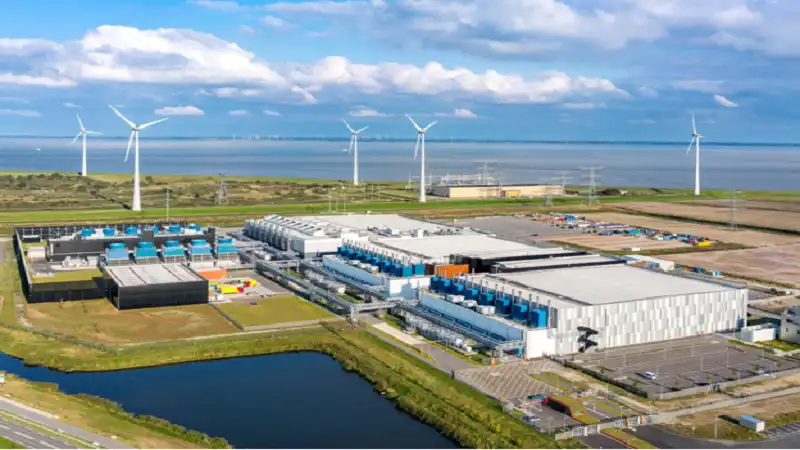
Most discussions about the rapid growth of data centers focus on artificial intelligence, cloud computing, or the rising demand for digital services.
These technologies are driving growth, but there is more to the story.
Every new data center relies on a large network of manufacturers, logistics providers, procurement specialists, transportation teams, and project managers who work together to enable construction. Before servers ever process data, thousands of parts have already moved through a well-coordinated supply chain that most people never notice.
While it’s easy to admire a finished data center, building one on time is a much bigger challenge.
Every project depends on thousands of moving parts
A modern data center isn’t made from just a few big systems. It’s made from thousands of individual components that all have to arrive at the right place, in the right condition, and at the right time.
Transformers, generators, switchgear, cooling systems, electrical equipment, structural steel, cable management systems, batteries, and many other materials often come from different manufacturers in various regions or countries.
If just one key part is delayed, the whole construction schedule can be affected.
This is why supply chain planning is now one of the most important parts of building large infrastructure projects.
Timing matters just as much as availability
Just having materials on hand is not enough.
They also need to show up when the project is ready for them.
If expensive equipment arrives too early, it can cause storage problems, raise security concerns, and put sensitive parts at risk. If it arrives too late, it can delay contractors waiting to move on to the next phase.
Successful projects depend on well-coordinated schedules in which procurement, transportation, warehousing, and installation work together rather than separately.
That level of coordination becomes increasingly important as project timelines shrink and facility complexity grows.
Data center construction leaves little room for delays
Data centers often have much tighter schedules than many other commercial construction projects.
Owners want to add new capacity quickly because demand for computing power continues to rise across many industries. Any delay can push back revenue and increase project costs.
This pressure impacts every part of the supply chain.
Procurement teams need accurate forecasts. Manufacturers need clear production schedules. Transportation providers need reliable delivery times. Contractors need to trust that materials will arrive as promised.
Managing all these moving parts takes more than just buying materials. It also means having visibility throughout the whole project.
Organizations specializing in data center supply understand that success depends on coordinating procurement, logistics, scheduling, and inventory as one connected process rather than treating each responsibility separately.
Supply chains have become a strategic advantage
The past several years have shown how vulnerable global supply chains can be.
Material shortages, transportation delays, labor challenges, and shifting demand have affected construction projects worldwide.
Those experiences changed how many organizations approach planning.
Instead of reacting to disruptions after they occur, project teams increasingly focus on identifying potential constraints earlier. Alternative sourcing, longer planning horizons, improved communication with suppliers, and greater visibility into material movement have become valuable tools for reducing uncertainty.
Strong supply chain management is no longer viewed as operational support. It’s becoming a competitive advantage.
Communication keeps projects moving
One misconception is that supply chain success depends only on purchasing the right materials.
Communication often matters just as much.
Project managers, procurement teams, manufacturers, logistics providers, contractors, and owners all need accurate information throughout the construction process. A schedule adjustment in one area can affect deliveries, installation sequencing, labor planning, and project milestones across multiple teams.
When communication is fragmented, even small issues can become significant delays.
When information flows effectively, teams can often solve problems before they begin affecting construction.
Visibility reduces unnecessary surprises
Construction projects will always involve uncertainty.
Weather changes. Manufacturing schedules shift. Transportation challenges arise. Site conditions evolve.
Complete certainty isn’t possible.
What project teams can improve is visibility.
Understanding where critical materials are, when they’ll arrive, and how delays could affect future milestones enables better decisions before problems spread throughout the project.
Companies such as BluePrint Supply Chain focus on creating that visibility because complex infrastructure projects require more than efficient purchasing. They require coordination across every stage of the supply chain so construction teams can keep moving with confidence.
Digital infrastructure depends on physical coordination
It’s easy to think of data centers as purely technology-driven facilities.
In reality, every server, cooling system, electrical component, and structural element depends on physical materials arriving exactly when they’re needed.
Without effective procurement, transportation, inventory management, and logistics planning, even the most advanced technology can’t be installed on schedule.
That’s why supply chain strategy has become one of the least visible but most important parts of modern data center development.
The facilities powering artificial intelligence, cloud computing, financial systems, healthcare, and global communications all begin the same way, with thousands of carefully coordinated decisions happening long before a single server is switched on. Behind every successful project is a supply chain working quietly in the background, ensuring every piece arrives where it belongs, exactly when it’s needed. See more